Technical Surveillance Countermeasures
How to Detect Hidden Cameras in Your Hotel Room or Airbnb
Hidden cameras in rental accommodations are a real and documented problem covered by ABC, BBC, and the New York Times. This guide walks through a systematic arrival check, smartphone detection methods, and when professional TSCM is the right call.
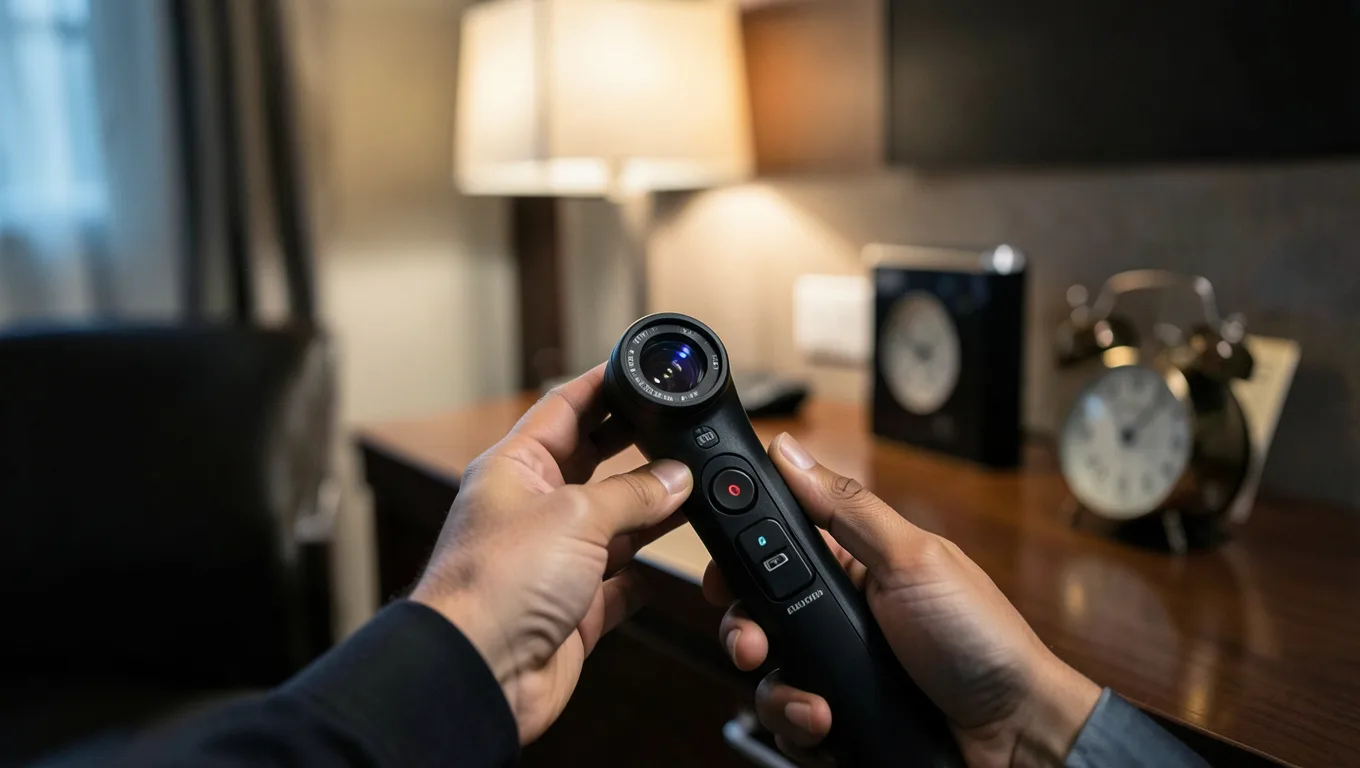
Why short-term rentals present unique privacy risk
A hotel room managed by a professional hospitality company has maintenance records, cleaning staff, and security infrastructure. Short-term rental properties introduce a fundamentally different dynamic. The space is managed by a private individual — the only person with unfettered access before your check-in and after your departure is the host. In documented cases, hosts have placed cameras in bedrooms, bathrooms, and common areas specifically to record guests. Reports have appeared in ABC, BBC, and The New York Times, ranging from crude consumer devices in alarm clocks to sophisticated pinhole cameras embedded in smoke detectors and power adapters.
This is not an indictment of the short-term rental market, which the vast majority of hosts operate ethically. It is an acknowledgment that the environment creates an access opportunity that demands a methodical arrival check — particularly in bedrooms and bathrooms, where the implications of a hidden camera are most serious.
What hidden cameras look like in rental accommodations
The most common hidden cameras found in rental properties are consumer-grade devices disguised as ordinary household items. Smoke detectors provide an elevated, ceiling-level vantage point and draw no attention — the lens is typically positioned in the center of the unit, masked by a small dark dot that blends with the detector's design. Alarm clocks with embedded cameras are among the oldest and most common covert recording devices. USB wall chargers with cameras are widely sold, plug into any standard outlet, and appear completely ordinary while recording continuously.
Picture frames and decorative objects can conceal a lens smaller than a pinhole. Air purifiers, fans, and larger appliances can hide cameras with complete ease. The critical observation in any rental room: what objects are positioned with a natural line of sight to the bed, bathroom, or dressing area — and do any of those objects seem newer, cleaner, or differently angled than everything around them?
Further Reading
A systematic room check when you arrive
Before unpacking, walk through the property and identify everything with a lens or a power source. Then darken the room and sweep a flashlight beam slowly at eye level across your field of view — camera lenses return a small, bright pinpoint reflection that flat surfaces do not produce. Your phone's front-facing camera can detect infrared illuminators invisible to the naked eye: in a completely darkened room, open the camera app and scan the space — IR sources appear as white or purple light on screen. Also scan the visible Wi-Fi networks in the property; many consumer cameras transmit over Wi-Fi, and an unrecognizable network with a generic or technical name is worth noting.
Inspect the bathroom last and thoroughly. Check every smoke detector, air freshener, shaving mirror, and any device with a direct line of sight to the shower or toilet. Run this same process in the bedroom, paying particular attention to anything mounted at ceiling height, positioned on a nightstand, or plugged into an outlet near the bed. The inspection takes ten minutes and is worth doing on every stay.
What to do if you find a device
Stop using the area immediately. Do not remove the device before documenting it — photograph it in place from multiple angles and record video noting the time and date. Then notify the platform: Airbnb, VRBO, and similar services have escalation processes for hidden camera reports and take them seriously. Your documentation needs to be complete and timestamped before you make that contact.
Contact law enforcement. In Pennsylvania and most states, placing a recording device in a private space without consent is a criminal violation. A police report creates an official record and may trigger a broader investigation of the property and host. For clients who need professional documentation of surveillance findings for use in legal proceedings, Empire Investigation provides TSCM verification and evidence handling services.
Keep Reading
More from the journal
TSCM
How to Tell If Your Office Is Under Surveillance: A Professional's Guide
A competitor quotes your pricing before you announce it. A negotiating position leaks. The question isn't whether surveillance can happen in your office — it's whether it already has.
Read Article
TSCM
GPS Tracker on My Car: How to Find It — And What to Do Next
GPS tracking devices are available online, delivered next-day, for under $300. Installation takes under 60 seconds and no tools. Here is where they hide and how to find them.
Read Article