Technical Surveillance Countermeasures
GPS Tracker on My Car: How to Find It — And What to Do Next
Think someone put a GPS tracker on your car? Learn exactly where trackers hide on vehicles, how to inspect your car yourself, and when to call a licensed Pittsburgh investigator for a professional electronic sweep.
Who places GPS trackers — and why it matters to know
GPS tracking devices are not exotic intelligence tools. They are available online, shipping in one to two days, for $30 to $300. Installation requires no technical skill and under 60 seconds. The people who use them range widely: estranged spouses in contentious separations use real-time location data to build a surveillance picture ahead of legal proceedings; adversarial parties in business disputes and custody battles use them as part of a broader surveillance effort; and employers track company vehicles legally in most states, though the framework differs when the vehicle is also used personally.
Stalkers and harassers represent the most urgent category. If someone appears to have an inexplicable awareness of your location or schedule — and has the motive and opportunity to have placed a device — a GPS tracker on your vehicle is a serious possibility that warrants investigation rather than dismissal. Private investigators working a domestic case may also lawfully place a tracker on a vehicle their client co-owns, which means the concern can come from multiple directions in any disputed situation.
Where GPS trackers are typically hidden on vehicles
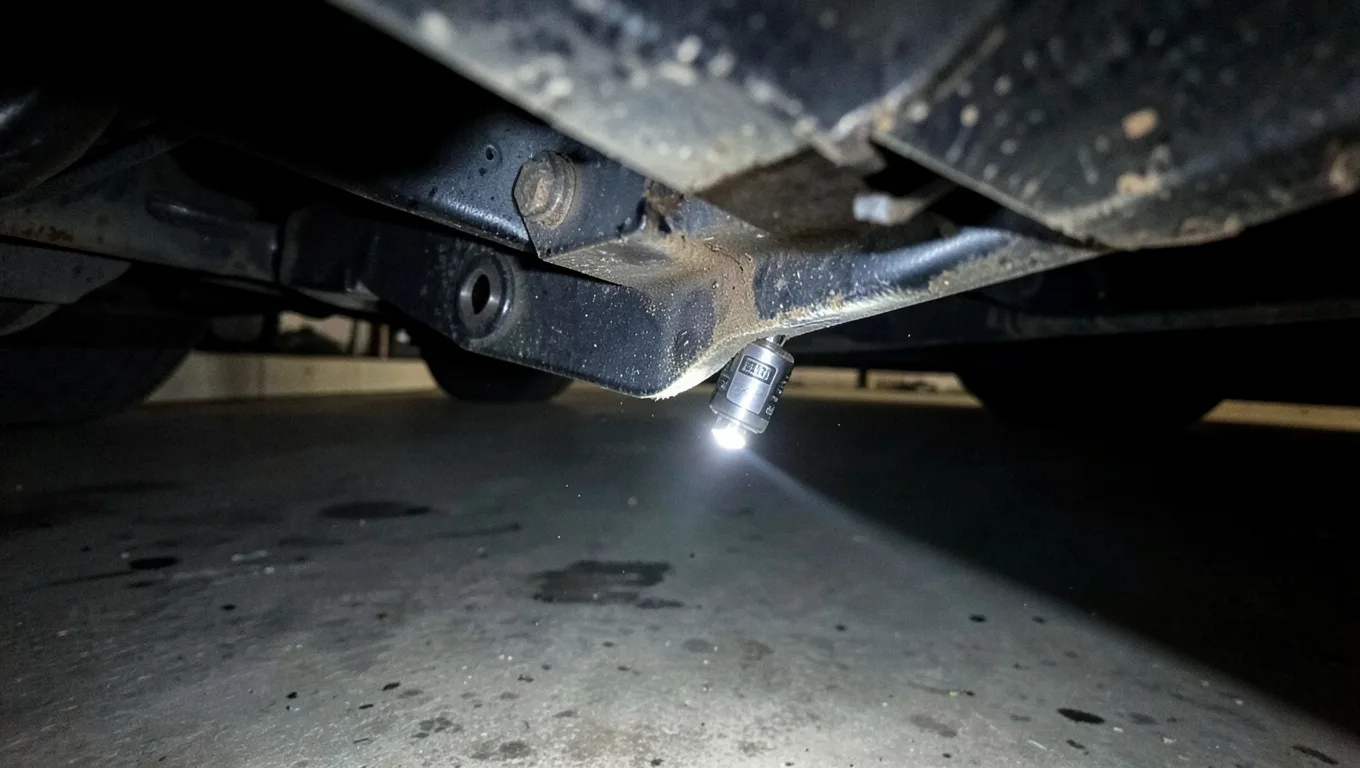
Placement follows a clear logic: magnetic attachment to metal, hidden from casual view, accessible for retrieval or service. Wheel wells — particularly the rear two — are the most common location. The tracker adheres to the inside surface of the wheel arch and is invisible without crouching and looking up into the wheel well. The undercarriage along the frame rails, near the fuel tank, and along the exhaust tunnel are the next most frequent locations. Front and rear bumpers are popular because the tracker sits against the metal mounting bracket inside the bumper cavity, completely hidden from outside.
The OBD-II diagnostic port beneath the dashboard accepts plug-in GPS devices that require no magnet, no battery, and draw power directly from the vehicle's electrical system — five seconds to install, easy to overlook unless you specifically inspect that port. Under the front seats and along seat rails are less common but documented interior placement locations. Hardwired trackers — professional-grade devices spliced into the vehicle's electrical system — are smaller, have no battery to deplete, and are significantly more difficult to find without knowing what vehicle wiring should look like.
Further Reading
How to inspect your vehicle yourself
A thorough self-inspection starts at ground level with a bright flashlight. Systematically move along the underside of the vehicle from the front wheel wells toward the rear, checking both frame rails, the fuel tank area, the spare tire compartment, and behind the rear bumper. Run your hand along the inside surface of each wheel well, feeling for anything attached to the metal — wear gloves, the surfaces are often sharp. An inspection mirror on a telescoping handle lets you see into bumper cavities your flashlight cannot reach at an angle. Check the OBD-II port directly for anything plugged in that you did not place there.
What you are looking for: any small rectangular object that should not be present, an object with a wire attached, or anything with an indicator light. A professional vehicle sweep adds one critical capability that self-inspection cannot replicate — electronic signal detection. An active GPS tracker transmits location data at intervals, and those transmissions are identifiable with professional RF detection equipment even in locations that physical inspection cannot access without disassembly. Passive trackers, which record locally without transmitting, can only be found through physical inspection.
What to do when you find a tracking device
Do not remove the device immediately if you are involved in active litigation or a legal matter. A tracking device may constitute evidence — photograph it in place first, note its location and any identifying markings, and consult an attorney before removal. If the tracker is active, it is currently reporting your location. Avoid driving to locations you would prefer to keep private — an attorney's office, a new residence, a meeting — until you have addressed the situation.
Contact law enforcement if appropriate. Pennsylvania law prohibits placing a tracking device on a vehicle without the owner's consent, with limited exceptions — unauthorized tracking is a criminal matter. Empire Investigation documents any device found during a professional sweep and provides a written report suitable for law enforcement contact and legal proceedings. The goal is not simply removal — it is creating a complete, defensible record of what was found, where it was, and what it means for your specific situation.
Keep Reading
More from the journal
TSCM
How to Tell If Your Office Is Under Surveillance: A Professional's Guide
A competitor quotes your pricing before you announce it. A negotiating position leaks. The question isn't whether surveillance can happen in your office — it's whether it already has.
Read Article
Private Investigations
What an Infidelity Investigation Can and Cannot Prove
The goal is not drama. It is clarity strong enough to support a personal, legal, or financial decision.
Read Article