School Security Investigations
Hidden Camera Found in a School: An Incident Response Guide
When an unauthorized recording device surfaces inside a school, the next sixty minutes matter more than most administrators realize. The decisions made before law enforcement arrives, and before parents learn anything, will shape every outcome that follows.
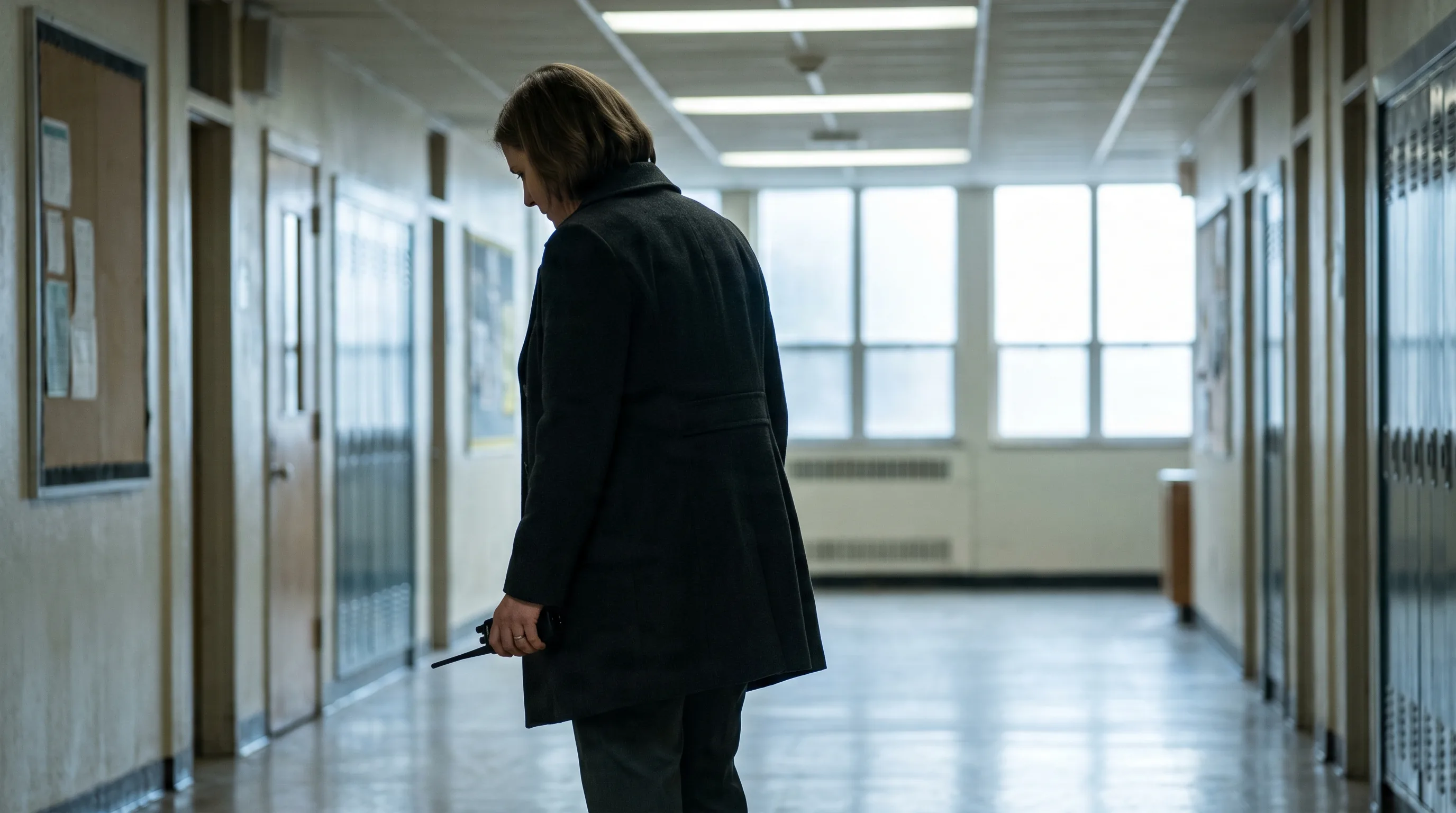
The Moment Everything Stops
It begins, almost always, with a custodian or a student. A small lens catches the light at an angle it should not. A wire disappears into a wall in a room where no wire belongs. Someone pauses. Looks again. And in that pause, a school day that began with attendance sheets and morning announcements quietly becomes something else entirely.
What happens in the minutes after that discovery, before any call is made and before any administrator touches a single thing, will determine whether the investigation that follows is clean or compromised. Evidence is fragile. Chains of custody are broken in seconds by well-meaning hands. The instinct to act quickly is understandable. The instinct to act without a plan is dangerous.
Why This Threat Has Changed, and Why It Arrives Without Warning
The miniaturization of consumer recording technology over the past decade has made covert surveillance devices accessible to nearly anyone. What once required specialized knowledge and uncommon hardware now ships in two days and costs less than a textbook. Cameras disguised as smoke detectors, electrical outlets, USB chargers, and clock radios are sold openly and legally, marketed for home security. Their misuse inside schools, locker rooms, restrooms, and counseling offices represents one of the more serious and rapidly growing categories of institutional privacy violations.
The legal exposure for a school is not limited to the act itself. Courts and regulators have increasingly scrutinized how institutions respond once a device is found. A misstep in evidence handling, a premature public statement, or a failure to notify the appropriate authorities within required timeframes can transform a school from victim into respondent. The incident does not end with the discovery. In many respects, it begins there.
School administrators are prepared for fire drills and lockdowns. Very few have a written protocol for what to do in the first hour after an unauthorized recording device is discovered on school property. That gap is where consequences accumulate.
Further Reading
What Professionals See That Administrators Typically Miss
The most common error is also the most intuitive one: picking up the device. Administrators want to confirm what they are looking at, want to disable it immediately, want to protect whoever might still be recorded. All of those instincts are reasonable and nearly all of them contaminate the physical evidence. A fingerprint introduced in the first sixty seconds of discovery can cloud an investigation for months.
The second error is containment without documentation. A room is locked, access is restricted, and no one thinks to photograph the device in position before anything is moved, measure its field of view, note the angle of the lens, or record the exact time and circumstances of discovery. Investigators and prosecutors will ask for all of this. The answers must come from something more reliable than memory.
The third error is communication. An administrator calls the district's general counsel, then the principal calls the superintendent, and before any trained investigator has been consulted, the incident has been described in three email chains and a group text. Each of those communications becomes discoverable. Each informal characterization of events creates a record. Discipline in communication is not paranoia. It is standard incident management.
Where Specialized Investigators Enter the Picture
There is a narrow corridor of the private-security world occupied by firms that combine technical sweep capability with investigative discipline and court-ready documentation standards. Empire Investigation, licensed in Pennsylvania and carrying nearly half a century of field experience, holds Ross Engineering TSCM credentials, the recognized standard for professional counter-surveillance work. That combination, technical detection paired with investigative methodology, matters when a school-based incident reaches a courtroom.
A TSCM sweep of a school building conducted in the immediate aftermath of a discovery serves a purpose beyond finding additional devices, though that alone can be decisive. It produces a documented record of what was present, where it was located, what its technical capabilities were, and the condition in which it was found. That record, prepared by a credentialed investigator, carries weight with law enforcement, with school counsel, and eventually with a jury if the matter proceeds that far. Investigators familiar with these cases have noted, broadly speaking, that a single discovered device is rarely the only device present. A methodical sweep answers that question definitively.
National media and law enforcement agencies have engaged Empire's services across a range of sensitive institutional matters, precisely because the documentation standards hold up under scrutiny and the firm operates with the discretion that exposure of this kind requires.
The First Seventy-Two Hours: What Should Happen and In What Order
The moment a device is found or credibly suspected, the sequence matters. First, stop. Do not touch the device. Photograph it from multiple angles before anyone is tempted to move it. Secure the room and limit access to the smallest number of people necessary. Write down the time, the name of the person who made the discovery, and the precise location, including height, angle, and proximity to areas where individuals would reasonably expect privacy.
Second, notify law enforcement. In Pennsylvania and in most jurisdictions, the discovery of a covert recording device in a school triggers mandatory reporting obligations. Law enforcement should be called before parents, before the school board, and before any press inquiry is fielded. Allow investigators to process the scene before the room is disturbed further.
Third, retain a private investigative firm with TSCM capability to sweep the remainder of the building independently and to begin building the documentation file that school counsel will need. Law enforcement and private investigators can and do work in parallel on these matters. The private record serves the school's civil and administrative interests; the law-enforcement record serves the criminal case. Both are necessary.
Fourth, engage the school's legal counsel before any statement is made to parents, staff, or media. The substance of what is communicated, when, and through which channel is a legal and strategic decision. Counsel should own that timeline, not the communications department and not the principal acting under pressure at a morning assembly.
Fifth, preserve all access logs, key card records, scheduling systems, and security camera footage without alteration. The investigative question of who had physical access to the location where the device was found is often answered by records that schools already possess but do not immediately think to secure.
The Complication: Not Every Discovered Device Is a Crime Scene
Precision matters here. Not every camera found in a school building represents a voyeurism case or an assault on student privacy. Facilities departments install recording equipment. IT staff place monitoring devices in server rooms. Security contractors occasionally leave equipment without adequate documentation of its location or purpose. In a small number of incidents, what appears to be an unauthorized device has a mundane and sanctioned explanation.
This is not an argument for delay. It is an argument for rigor. A professional TSCM evaluation answers the question dispassionately. Who authorized this device? Does it appear on any institutional record? Is it transmitting, recording locally, or dormant? What is its field of view, and does that field of view include areas where privacy is legally protected? These questions should be answered by a trained investigator with the equipment to answer them, not by inference or assumption.
An administrator who treats every discovered device as confirmed criminal evidence before that determination is made can expose the school to reputational and legal consequences of a different kind. The discipline of the response is to move deliberately and document everything, without drawing conclusions the evidence has not yet supported.
What to Preserve, What to Avoid, and How the Assessment Begins
Preservation begins with restraint. Do not power down the device. Do not attempt to access its storage. Do not connect it to any school network or personal device. These actions can destroy forensic evidence and may, depending on jurisdiction, complicate the criminal investigation. The device should be secured in place, or if it must be moved for safety reasons, handled with gloves and bagged without being powered off.
Access logs from any door-control system covering the affected area should be exported and stored immediately. Security camera footage covering corridors adjacent to the room, if it exists, should be copied to a separate drive and held with documented chain of custody. Scheduling records that show who used the room in the days and weeks preceding discovery should be compiled and held for investigative review.
Avoid informal conversations about the incident in unencrypted messages or on personal devices. Avoid assigning staff to investigate on their own before trained investigators arrive. Avoid any action that could be characterized as tamping down the scope of the incident.
A private investigative assessment typically begins with a confidential intake: the administrator describes the discovery, the layout of the building, the nature of the space involved, and the access patterns of the people who routinely occupy it. From that conversation, the investigator can advise on whether a full-building TSCM sweep is warranted, which records to preserve in what order, and how to structure the documentation file so that it serves counsel effectively throughout the matter.
The Point Is Not Fear. It Is Stewardship.
A school is a protected environment, one that operates on a specific institutional promise: that children and staff are safe within it. When that promise is violated by a covert recording device, the response cannot be improvised. The students, the families, and the public trust that follows an institution through events like this are all shaped by the quality of what happens in the hours and days after discovery.
The question is never whether the incident matters. It always does. The question is whether the people responsible for the institution respond with the clarity, discipline, and expertise the moment requires.
If a device has been found, or if there is reason to believe one may be present, a confidential consultation with a credentialed investigator is the appropriate first call.
Questions, Answered
Keep Reading
More from the Dispatch
Corporate Investigations
When Trusted Access Becomes the Money Trail
The uncomfortable lesson is that money laundering does not always need a sophisticated disguise. Sometimes it needs routine access, a trusted employee, and records filed just incorrectly enough to keep the pattern moving.
Read Article
Corporate Investigations
When the Bank Misses the Pattern: What the EagleBank BSA Case Teaches Corporate Clients About Financial Intelligence
A bank can see the transactions and still miss the pattern. The question for executives, lenders, attorneys, and family offices is whether anyone independent is looking at the relationship behind the movement.
Read Article